
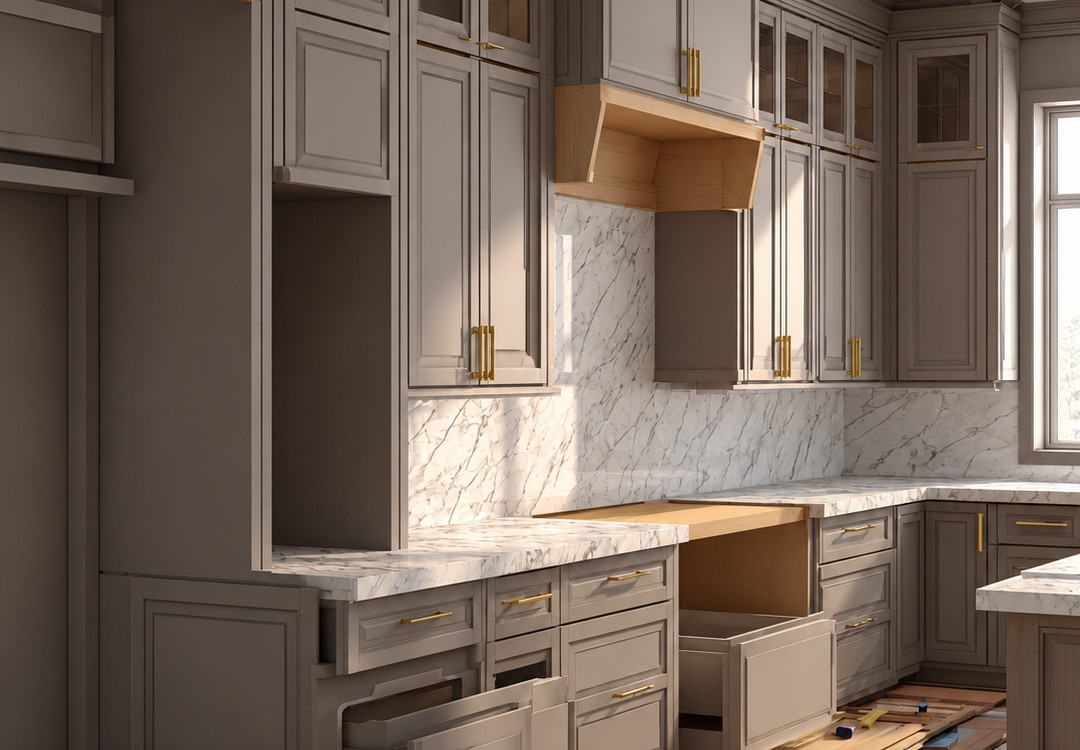
Porcelain tile is usually the best all-around choice for a bathroom because it handles moisture well, is durable, and works for both floors and many wall applications. Ceramic tile is an excellent option for walls, while natural stone can create a distinctive look but generally requires more maintenance.
When we plan a bathroom, we consider where the tile will be installed, water exposure, traction, cleaning, and how it will work with the vanity, flooring, shower, and countertops.
For homeowners considering Bathroom countertops Green Hill, TN, the same principle applies: every surface should be selected according to how it will actually be used.

Is porcelain tile a good choice for bathroom floors?
For Bathroom countertops Green Hill, TN, we also consider whether the tile will complement the countertop material rather than compete with it.
Porcelain is one of the strongest general-purpose choices for bathroom floors because it is dense, durable, and has low water absorption. It is available in many finishes, colors, sizes, and patterns, so we can use it in everything from a guest bathroom to a large primary suite.
For floors, we pay close attention to surface finish rather than choosing a tile only because it looks attractive. A highly polished surface can become slippery when wet, while textured or matte finishes generally provide better traction.
Is ceramic tile better for bathroom walls?
Ceramic tile is often an excellent choice for bathroom walls because walls do not experience the same foot traffic as floors. It comes in a wide range of colors, shapes, textures, and decorative patterns.
For shower walls, however, we pay particular attention to waterproofing behind the tile. Tile itself is not the waterproofing system. The substrate, membrane, seams, and transitions all have to be installed correctly.
What is the difference between porcelain and ceramic tile?
The main difference is density and water absorption. Porcelain is a type of ceramic tile manufactured to meet a lower water-absorption threshold, while standard ceramic tile is generally less dense.
| Feature | Porcelain | Ceramic |
|---|---|---|
| Water absorption | Very low | Generally higher |
| Bathroom floors | Excellent | Good when appropriate |
| Bathroom walls | Excellent | Excellent |
| Durability | High | Moderate to high |
| Design options | Very broad | Very broad |
| Maintenance | Low | Low |
The right choice still depends on the specific product. We check the manufacturer’s specifications instead of assuming that every tile within a category performs identically.
Is natural stone a good choice for a bathroom?
Natural stone can be a beautiful bathroom material, but it requires more attention to maintenance and sealing. Marble, travertine, slate, and limestone all have different characteristics.
Marble is popular for shower walls, floors, and accents because of its natural veining. However, it can react with acidic substances and may require periodic sealing, so we explain those requirements before recommending it.
Which tile is best for a shower?
Porcelain and ceramic are both practical shower-tile choices when the installation system is properly waterproofed. For the shower floor, smaller tiles or mosaics are often useful because their grout joints can provide additional traction and make it easier to create the required slope toward the drain.
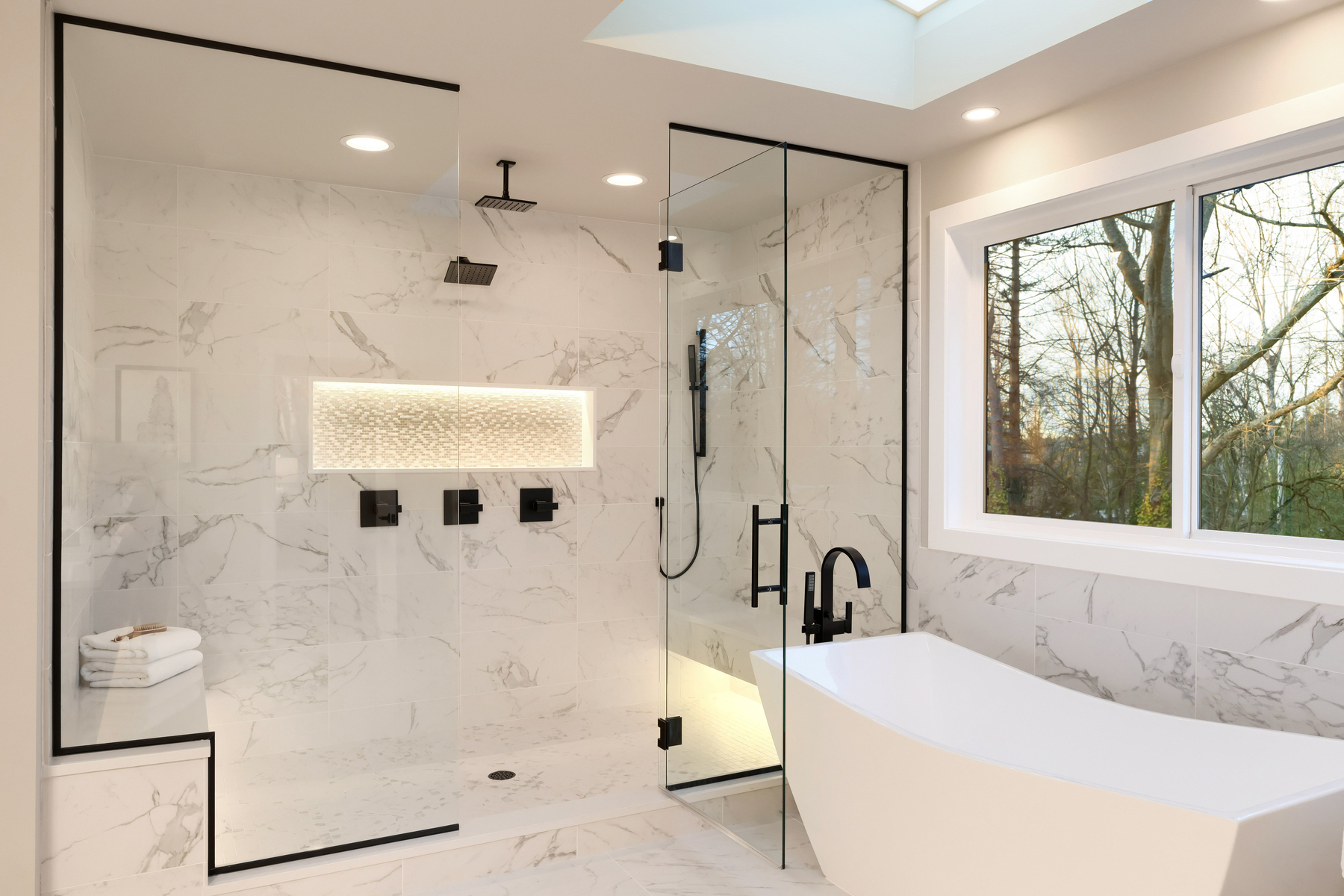
Large-format tiles can work beautifully on shower walls. They create fewer grout lines and can make the shower look cleaner and more spacious.
For shower floors, we consider:
- Slip resistance
- Tile size
- Drain location
- Required slope
- Grout type
- Cleaning requirements
Are large-format tiles good for small bathrooms?
Large-format tiles can work very well in small bathrooms because fewer grout lines can make the space feel less visually divided. They can also create a cleaner, more continuous appearance.
However, large tile is not automatically easier to install. The floor or wall needs to be sufficiently flat, and careful layout is important around corners, niches, drains, and doors.
When homeowners ask us about Bathroom countertops Green Hill, TN, we often look at the entire room rather than treating the countertop as a separate decision. A large-format wall tile may pair beautifully with a simple countertop and vanity.
What tile is easiest to clean?
Smooth porcelain and ceramic surfaces with well-maintained grout are generally among the easiest bathroom finishes to clean. Fewer grout joints can also mean fewer areas where soap residue and moisture can accumulate.
For a busy family bathroom, we often recommend keeping the main surfaces relatively simple and using decorative tile in smaller areas. This gives the room character without creating unnecessary cleaning work.
Natural stone usually requires more care. Some stones need sealing, and certain cleaners that are acceptable for ceramic or porcelain may not be appropriate for natural stone.
How should bathroom floor tile be chosen?
Bathroom floor tile should be selected for both traction and moisture exposure, not just appearance. A polished tile can be a poor floor choice if it becomes too slippery when wet.
We also consider the size of the room. Smaller bathrooms can benefit from patterns that visually widen the floor, while larger rooms give us more flexibility with large-format tile, borders, or contrasting zones.
What grout works best with bathroom tile?
The best grout depends on the tile, joint size, location, and expected exposure to water. In wet areas, we consider products designed for bathroom conditions and follow the manufacturer’s installation requirements.
Grout color also affects the appearance of the room. Matching grout closely to the tile creates a more continuous look, while contrasting grout emphasizes individual tile shapes.
Should bathroom countertops match the tile?
Bathroom countertops do not need to match the tile exactly, but the two materials should work together visually and functionally. We usually recommend coordinating color, undertones, texture, or veining instead of trying to find two materials that are identical.
For Bathroom countertops Green Hill, TN, we can consider the countertop alongside the vanity, shower tile, floor tile, backsplash, hardware, and lighting. This creates a more intentional design than selecting each surface separately.
What bathroom tile combinations work well?
The best combinations usually use one dominant material, one supporting material, and a smaller accent. Using too many competing patterns can make a bathroom feel busy.
| Main tile | Supporting material | Overall effect |
|---|---|---|
| White porcelain | Soft gray floor tile | Clean and simple |
| Marble-look porcelain | Neutral matte floor tile | High-end appearance with practical maintenance |
| Subway ceramic | Small-format floor tile | Classic and versatile |
| Large-format stone-look porcelain | Mosaic shower floor | Modern and functional |
| Natural stone | Simple ceramic wall tile | Warm and textured |
We can also use the same porcelain tile on the floor and shower walls in different sizes. This creates continuity while keeping the shower floor practical.
How long does bathroom tile installation take?
A typical bathroom tile project can take several days to a few weeks depending on room size, demolition, surface preparation, waterproofing, tile layout, custom details, and other remodeling work.
A simple floor replacement is much faster than a full bathroom remodel involving a shower, walls, vanity, plumbing, electrical work, and new flooring.
Our process generally includes reviewing the bathroom, confirming materials and layout, preparing the substrate, completing required waterproofing, installing the tile, grouting, and checking the finished work.
The schedule should be based on the actual scope rather than using one timeline for every bathroom.
What should you consider before choosing bathroom tile?
Start with the location of the tile, then consider moisture, traction, maintenance, size, color, and the rest of the bathroom design. This prevents a common mistake: choosing a tile because it looks good in a sample and discovering later that it is not practical for the intended surface.
Before choosing tile, we recommend considering:
- Floor or wall application
- Shower or dry-area installation
- Slip resistance
- Water exposure
- Cleaning requirements
- Grout color and joint size
- Tile size and room dimensions
- Coordination with countertops and cabinetry
- Long-term maintenance
For Bathroom countertops Green Hill, TN, we use the same practical approach: the final selection should make sense for the room, the homeowner, and everyday use.
How can Builders Empire help with a bathroom remodel?
Builders Empire approaches bathroom projects as a connected space, not a collection of unrelated finishes.
Builders Empire is based in Gallatin, TN, and our services include cabinets, countertops, flooring, tile installation, framing, painting, roofing, custom windows, and general contracting. Because bathroom remodeling can involve several connected trades, we can help coordinate the different parts of the project rather than treating tile as an isolated upgrade.
For homeowners in Green Hill, TN, we can help plan the relationship between bathroom tile, flooring, cabinetry, countertops, and installation. If you are comparing Bathroom countertops Green Hill, TN while planning a larger bathroom project, contact us at (615) 551-9151 or visit our showroom at 585 N Council Ave, Gallatin, TN 37066.
Builders Empire can help you evaluate materials and scope before work begins, so the final bathroom is designed around how you actually use the space.
FAQ
What is the best tile for a bathroom floor?
Porcelain is generally an excellent all-around option because it is durable, moisture-resistant, and available in many finishes. For floors, we also consider slip resistance.
Is ceramic tile good for showers?
Yes. Ceramic tile can work well on shower walls when installed over a properly designed waterproofing system.
Is porcelain better than ceramic?
Neither is universally better. Porcelain generally has lower water absorption and higher density, while ceramic can be an excellent choice for walls.
What is the easiest bathroom tile to maintain?
Smooth porcelain and ceramic are generally among the easiest options to maintain. Natural stone often requires more specific cleaning and sealing.
Are large tiles good for small bathrooms?
Yes. Large-format tile can reduce visible grout lines and create a more continuous appearance, but the installation surface must be properly prepared.
Does bathroom tile need to be waterproof?
The tile itself is not the waterproofing system. Wet areas such as showers require an appropriate waterproofing assembly behind the tile.
Should bathroom countertops and tile match?
They do not need to match exactly. Coordinating colors, undertones, textures, or veining usually creates a more balanced result.